
Wednesday 29th January
5:30am Rise, this is getting to be a habit, watched another sunrise whilst eating breakfast.
Puntarenas is 100 nautical miles West of Limon which we visited 3 days ago, the weather is just as hot though. Limon’s on the Atlantic coast and Puntarenas is on the Pacific coast, Puntarenas is drier though and more mountainous.
This morning we are going for a walk around the treetops, sounds a bit ominous as the temperature is forecast to be 36°C.
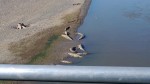
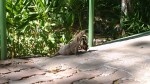
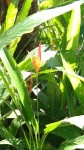
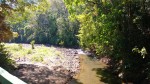
Once again we board our bus and our guide introduces himself as Jonathan (pronounced Jonaton) and our driver Darryl, I did a double take at the name, but no it wasn’t him, (just imagine the taxi bill). We set off driving south climbing all the time, through pineapple and sugar cane plantations. The undergrowth is less tropical looking the higher we climb, though there are still many broadleaf tropical plants typical of the rain forests. We stop for photos of iguana burrows, heads peeping out to see what all the fuss is about and further on we stopped on the bridge over the river Tarcoles, one of the most crocodile inhabited rivers in Costa Rica and sure enough, we see several basking in the sun beneath the bridge.
After an hour and a half we reach the trek and Jonaton gives us a severe warning not to touch any of the undergrowth whatsoever as many of Costa Rica’s poisonous snakes rely on camouflage and just brushing past leaves and bushes etc. can result in a nasty bite/sting or other. Thanks Jonaton, just what we needed. The path is through one of Costa Rica’s national parks and Jonaton tells us that 32% of Costa Rica is national park, where strict rules exist about building and chopping down trees etc. A bit like ours then. But seriously, Costa Rica is very keen on its National Parks as it recognises the value of them and their popularity to tourist. From what we have seen, if you are fascinated by varied wildlife, Costa Rica should be on your to do list.
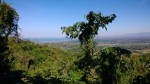
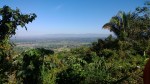
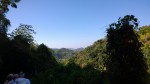
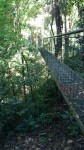
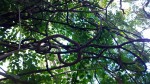
As we descend into the forest the noise from the cicadas is deafening and they are only about an inch long (grasshopper lookalike with big eyes, for those who are wondering). Unfortunately it is a bit late in the morning to see much wildlife as it is too hot for them (what was it about mad dogs and English men), sweat is beginning to insist on being attended to, but there is nothing we can do about that as there’s not much sun under that canopy, so getting out of the sun is not an option. We trek on in silence, well apart from the cacophony of the cicadas that is and from the sound of sweat dripping onto the surrounding vegetation. We approach the first bridge and all bump into each other as the first person balks at stepping on. Even sorting ourselves out is an effort. When it’s my turn to step on I can see why. Through the wire mesh that forms the deck of the bridge you can see the forest floor some 200 feet below and the sides of the bridge are made of fence mesh, 6” square mesh that is. The whole bridge is suspended on cables about ¼” diameter and a notice sternly orders; “Maximum of twenty persons at one time”. This worried me as no one was counting and some of the people were; well not to put too finer point on it, well nourished. As we crossed, the bridge set up an unnerving swaying motion as everyone crossing seemed to automatically fall into step. Break step I think to myself but I guessed they wouldn’t know what I was on about if I’d shouted it out loud. Crumbs! Even the Romans knew to break step when crossing an unstable bridge. If anyone had been watching they would have seen twenty assorted tourist determinedly marching in step followed by a little skinny chap frantically out of step on a wildly swaying rope bridge high up in the canopy and they would have held their breath. Even the cicadas stopped their chirping to watch, eyes more agog than usual, at what these crazy tourists get up to when out of their native environment. We made it though, eventually and stepped on to terra firma, Phew! I thought, that’s that over with. Little did I know.
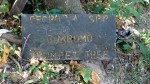
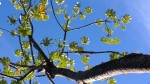
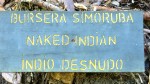
On we trek, past various exotic plants pointed out to us by Jonathon who is too far up the line for me to hear properly. Until we come to one large tree that Jonaton proudly announces is a Trumpet tree, the leaves of which are very good for slimming. Why it’s called the Trumpet tree, I know not, but the Trumpet tree it is, and if you eat its leaves you will lose weight. As all the trees are protected, there is no way of disproving the theory, but I can almost hear the reaction I would get in the Jolly Brewers if I came out with that story. Further on we stop by another tree, this one’s called the Naked Indian Tree (don’t ask), it is good for curing cancer. Jonaton tells us that a man with only hours to live had drunk the sap of this tree and is still alive after ten years. He didn’t say how the man managed to chop the tree down, drain the sap and drink it. I didn’t ask, no point in spoiling a good story.
Round the next corner another swinging footbridge. Oh no! This one looks longer higher and swingier than the first one. The line marches determinedly on to it (the guy who was first last time, has slipped back down the line, traumatised by his first experience). Same experience as last time, but by now I’m too hot and sweat soaked to care. Round the next corner we happen upon a Wanacastre tree (or Ear Tree), this one’s good for; (wait for it), making earrings. It’s true, Jonaton told us the native Indians used it to make earrings. (Jolly Brewers laughter rises to a crescendo). We all stare up in wonderment that the Indians would bother to trek this far into the jungle to find a tree suitable for making earrings, with or without swinging rope bridges. On we trek, it’s getting hotter if that’s possible.
Round another corner high on a hillside and Jonaton shouts LOOOK! We all stare up to where he is excitedly pointing. High in the sky, we stare and as our eyes become accustomed to the unexpected brightness, we see a tiny black dot. That, Jonaton tells us proudly is a Crested Cara Cara, which it turns out is a sort of black and white eagle. He could have told us anything at this point, we must have lost at least a stone in sweat. It was whilst looking up at this speck in the sky that someone pointed out that we were in the way of a trail of leaf cutter ants and sure enough looking down we could see a long trail of ants all busy carrying a section of leaf high above their heads. They looked like a miniature trade union protest from the sixties, and they hadn’t bothered to go round my foot they were marching over it. Jonaton told us that they didn’t stop day or night, continuously storing leaves for the production of fungi in the nest. He said if you look carefully you will see each leaf has another smaller ant on it who’s job is to clean the leaf prior to storage and sure enough there was a tiny brown ant busily cleaning the section of leaf whilst being carried back to the nest by the larger soldier ant.
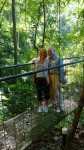
Over the next bridge, but not before Jonaton tells us he is going to take a photo of each of us with our own cameras as we step onto the bridge, because this is the biggest and the best. Presumably so there is evidence in case of disaster that we were smiling when we started out and not forced on to it against our will. When I get the transferring/uploading of photos sorted Paul will be able to put them on the blog and the true horror of what we (well I) have gone through, will become apparent. Carol seemed totally unperturbed, nerves of steel that woman.
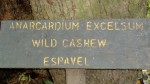
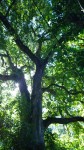
Then the final challenge. We have come to a fork in the path (and a fork in my life). Jonaton is standing there, arms folded and grim faced. “Dat way” he points to our left “is a da bus ana da easy way back, dat way” he points to our right “is a da final bridge ana da Giant Wild Cashew Nut tree. If you no wanna cross the bridge twice then you can go straight to da bus ana miss da Giant Wild Cashew Nut tree” It appears that to see the Giant Wild Cashew nut tree we have to cross the bridge and ‘see the tree how big it’s grown’ then cross back to follow the trail to the bus. I hesitate, Carol does not! She walks to the right without so much as a glance at me, nerves of steel that woman. Several of the group slink off to the left muttering about being allergic to nuts. Jonathon stares at me with unblinking eyes. You wanna go with them to the bus or you wanna go with them nodding to Carol’s disappearing back. The challenge is obvious, go to the bus in disgrace and live the rest of my life without ever seeing the Giant Wild Cashew Nut tree and in the sure knowledge that Carol has, or walk tall (well tallish), cross the bridge twice and see the Giant Wild Cashew Nut tree. If only Carol had gone to the left the decision would have been easy, I could have gone with her, with the excuse that to do otherwise would have meant leaving her alone in the South American Rain Forest. As it was she had trolled off happy as you please leaving me alone in the South American Rain Forest, well me and Jonaton. So in the end I went right, dragging my feet reluctantly to the final (optional) bridge and the Giant Wild Cashew Nut tree. We crossed, we saw the Giant Wild Cashew Nut tree, it was a big tree. We crossed back and climbed after the others and then stared the people on the bus in the eye. That bridge was one hell of a bridge we said to each other and that tree! You have never seen a tree until you’ve seen a Giant Wild Cashew Nut tree.
It was all anti-climax after that. The trip back was fast, as it was all downhill. We stopped at a hotel for fruit and drink, and when we got back to Puntarenas we stopped at a bar for a beer and to try and download the photos. But their wifi seems as slow as the ships so I’m still not sure what success I’ve had. Anyway sea day tomorrow so can catch up on various things, like sleep.
Download Video
Hiya
Can you let us know which trip you have enjoyed the most and then every trip after that if you could maybe compare them. thx