Monthly Archives: March 2014

Killings then and now

Tuesday 18th March

Another wet and miserable day at sea, we seem to be lucky with the weather, dry sunny (but cool) in port saving the wet and miserable for sea time. Up late, leisurely breakfast then down to the theatre for the first of the mornings talks. We now have Lord Robert Winston on board giving a series of lectures this one about early Renaissance Art and its secrets. Impressed that I’m going to such highbrow talks? Well this one was brilliant, he put slides of well-known Renaissance paintings by famous artists (well he said they were and as they are hanging in famous art galleries then I suppose we have to believe him) and then proceeded to tell us what the subjects were suffering from and how he knew. Apparently Renaissance artists were sticklers for detail which helped no end in his diagnosis and as the subjects were well known and the date of the paintings known, it was quite easy to tie up the subject’s history of illness, death etc with the date of the painting. He pointed out known bruising someone suffering from the black plague would have, and often as the family wouldn’t want it known they would say he had died from something else. On and on through many different illnesses and conditions like dwarfism in its different forms. The artist even had the colourings for the different conditions right. One painting of an attractive nude woman, he described as suffering from a mental condition, the name of which escapes me and said her husband would have led a life of hell because of it. He diagnosed this partly from the history of her behaviour and partly from the pose and the expression on her face.

His final painting of a husband morning the death of his pretty wife, who it was said he had killed with a spear when out hunting mistaking her for a wild animal in the undergrowth as she ran towards him. Robert Winston said the evidence in the painting pointed to murder. The slight bleeding from the small cut in the neck was typical of a spear point exit wound not an entry wound. Other minor cuts on the body and in particular cuts on the hands pointed to her defending herself prior to turning and running, whereupon the husband threw the spear which hit her in the back of the neck penetrating the neck high up at the back right through down to the front. But the killer evidence was the angle of the hand in death. It was bent unnaturally at a sharp right angle towards her body, which is evidence of a typical spasm caused by the spinal cord being cut through and from the small incision low down in her neck this was extremely unlikely to have happened from the front. So he said rather than a tragic accident, this was more than likely murder.

And talking of murder the second talk was by Ian Brown an ex Detective Superintendent who worked on the Kray’s case. He talked about the Krays with anecdotes that you don’t see in the books, like they were as thick as two short planks, they had animal cunning but they were thick. They never bet on the horses because they couldn’t understand the odds. They left evidence lying around because they thought they were invincible, their tame Lord wouldn’t help them and the bent coppers wouldn’t so they were banged to rights. His delivery style was typical of an officer briefing the squad before a raid, peppered with funnies and jokes. Nothing fazed him, even when the projection went wrong, he quipped “well that’s that then. There was this fella went into a pub…….” When the tech scampering around got it working he said “that it? – You got your 15 minutes of fame then!” The audience loved it. Both Robert Winston and him are on for five talks each so looking forward to the rest.
Kobe

Wednesday 19th March

8:00am sees us alongside in Kobe the home of the famous Kobe beef of renowned quality so tender it is said to melt on the tongue, no we didn’t have any. Kobe is also the home of a number of Sake brewers, yes we did have some, I liked it Carol didn’t, I had hers too.

Kobe is another place that has suffered earthquakes. In 1995 an earthquake measuring 7.3 destroyed most of the city killing 6,443 and leaving 300,000 homeless. As Japan’s sixth largest city, it must have had a big effect on the country.

We were not on a tour here so we caught the shuttle bus into town 15mins and after a walk round China town (yes all Japanese cities seem to have one) we jumped on the hop on hop off bus, which turned out to be a hop on only as there were so many waiting at each stop we didn’t think we would get back on if we got off. The commentary was by a lovely young Japanese girl who almost sang her commentary (Carol described it as lilting) couldn’t understand a word of it of course, but after a while it began to sound like a lullaby and I found myself drifting off, was she just repeating the same thing? After a full circuit, we got off and needing to find a loo we decided to go into a nearby department store by the name of Daimaru which turned out to be quite interesting, apart from the fact that all the ladies queuing for their loo could see straight into the gents at a long line of men stood facing the wall, bit off-putting to say the least. But while I was waiting for Carol I watched staff entering and leaving the office. Before they entered, they turned and bowed to the store and when they came out they bowed to the store even if no one was watching. Can’t see it catching on in Debenhams somehow.

Anyway, as we were in the store we decided to have a look round and went down to the food section in the basement. It was fascinating, a fantastic variety of cakes and breads and the fish section sold pre packed live giant prawns amongst other live fish. Can’t imagine that catching on in Tesco somehow. After that we decided to walk back to the ship where we wandered around all the exhibits on stands in the terminal. You could take part in the Japanese tea ceremony if you wanted but I thought it too much faff to get a cup of tea so I had a pint of Japanese beer which was surprisingly good, tawny straw colour, but not at all like lager. I spent a while trying to upload some pictures which gave me an excuse for another pint and Carol went back on board. Later an all-girl band started playing traditional Japanese music on those guitars that lay on the floor, at which point I went back on board. Before we sailed we were entertained by two dragons following each other around nose to tail. You could hardly see the people underneath 🙂 .

Day at Sea

Thursday 20th March

At sea again sailing down the coast of Shikoku Island towards Nagasaki still in the Pacific, but after Nagasaki we shall be entering the East China Sea days at sea will be scarce soon so best get the most out of this one, i.e. doing not much. Late breakfast again and then to another of Robert Winston’s talks, this time Human Instinct – Can Science make you happy? He talked mainly about how the brain has not changed in structure for millions of years, but grown in size and power. Hard wired functions like fear of spiders and the need to eat when food is abundant, but more importantly it was the ‘acceleration’ of power of the brain. This talk was followed by Ian Brown on the Ronnie Biggs story using a lot of Charmian Biggs and family material and refreshing the story of how he was not included on the robbery originally but as he said the he knew a train driver they let him join. Only to find out too late (i.e. on the train) that the train driver drove steam trains and couldn’t drive diesels. Another case of the master criminal myth buster. Oh! and he gave us the reason why they got thirty years each, a massive sentence at the time. He met the judge many years later and asked him why. The judge said he wanted them to serve ten years, but the labour government had just introduced two thirds remission for good behaviour in an effort to reduce prison populations, so in order for them to serve ten years he had to give thirty. The unintended consequences of good intentions. That’s all for today onwards to Nagasaki.

Nuclear Bombs and Squid

Friday 21st March

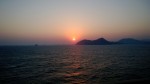
As we neared Nagasaki an early breakfast rewarded us with a wonderful typical Japanese dawn sky, the sort you see in water colours or painted on silk. A grey sea with smudgy dark grey islands in the foreground, lighter grey mountains on the horizon, backlit by a low lying soft orange which gave way to pink and then pale blue. Splashed on to this backdrop were thin wisps of light grey cloud. As we watched, the colours changed from pastel becoming more vibrant until the sun finally emerged as an intensely red molten disc, gradually changing to gold before the increasing intensity of its light finally swept all the colour from the sky. It was a spectacular sunrise.

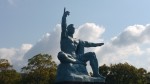
Now. Nagasaki. What to say without sounding negative. After that curtain raiser of a sunrise we were looking forward to our day in Nagasaki, but the shore landscape was not too promising. Heavy industry was the message it was sending us as we sailed up between the two shorelines, shipbreaking yards, industrial units and shabby warehouse estates were all that we could see. Our trip was to the peace park in the centre of town. Nagasaki is the home of the second nuclear bomb on Japan that effectively ended WWII, but compared to Hiroshima (the site of the first bomb) I felt it didn’t have anywhere near as powerful message. This could have been for any number of reasons. Nagasaki was not the intended target for the bomb, that was covered by cloud on the day of the raid and the pilot had orders that he had to have a visual confirmation before releasing the bomb, so they diverted to the secondary target, Nagasaki. When they arrived it too was covered in cloud and so as the three aircraft were on the point of returning without releasing the bomb, a window opened up in the cloud and they saw Nagasaki through it and took the opportunity to released their Bomb which was intended to destroy the shipyards on the opposite side of the harbour however for whatever reason (no one seems to know why), it exploded over the town about three miles from the shipyards which remained intact. The peace park is quite small and most of the monuments in it are gifts from other countries. As no one knows for sure where the bomb exploded they have marked a position where they think it did. Most of the remains they have on view have been dismantled from their original position and rebuilt near the peace park. So I can understand the difference in feelings between Hiroshima and Nagasaki. Hiroshima was the first city to be destroyed by a nuclear weapon, it was the intended target, the bomb exploded on target, evidenced by photographs and the building right under the exploding bomb remains in its original position as part of the peace park and the peace museum is located within the peace park. Nagasaki by contrast was a standby target. No one is sure where the bomb actually exploded but they know it was over the city and not the dockyards. The peace park is an area close to where they think the bomb exploded and they moved remains to it rather than leaving them in situ. The peace museum is not part of the peace park so it is all rather disjointed and the message they are trying to give is thus a bit diluted. But in fairness one of our table said he preferred Nagasaki as it concentrated on the damage to things rather than to people, as Hiroshima did.

In the afternoon we went to look at old wooden colonial buildings and the first paved streets that were installed by the Dutch in the eighteen hundreds. These are still attracting tourists from all over Japan, even though they do now have paved streets everywhere. Oh and yes I wondered that too. But it looks like the bomb exploded over the nearby hill, thus protecting this part of town.

So there you have it Nagasaki in a nutshell. A decent crowd turned out to wave farewell (as it was only 6.00pm) together with the (by now) obligatory band and for a change, a line-up of pompom bearing cheerleaders. As we did our customary 180° pirouette (I think the captain likes doing them just to show off – wheeee look at meeee). I noticed twinkling all round the harbour and on closer inspection realised that there were crowds lining every available space. All the industrial unit car parks were full of workers taking time off, cameras clicking away like demented Christmas tree lights. We left to many a cheer again and sailed into the East China Sea en route for Korea.

PS after getting turned in at about midnight I had hardly closed my eyes when the cabin lit up as if in a searchlight. Carol was zonked so I got up to see what was happening and not very far away were what looked like a pair of extremely bright headlights pointing straight at us, furthermore there were other identical pairs dotted all over the place. They were so bright I couldn’t identify what on earth they were, so I got the binoculars out to have a closer look as there couldn’t be cars driving around and they were definitely moving so they couldn’t be oil rigs which was my first guess. It was another first for me, I’ve never seen anything like it before but once I’d focussed in on the lights I could see a smallish fishing boat with two booms extended port and starboard. On each boom were suspended about twenty-five extremely bright (blue white) lights with silver reflectors. They were steaming at about ten knots so I guess they were towing some kind of net and not using rods, no idea what fish they were after, but if I find out I’ll let you know.

PPS Just found out they were fishing for squid, apparently the lights attract them up from great depths into the nets they have on the surface.

Korea – Busan

Saturday 22nd March

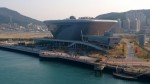
Well here we are in Busan in the Republic of Korea another heavy industry centre with massive docks. We are some twenty-five minutes away from town by shuttle bus, not much chance of walking it then, so onto the shuttle bus we scuttled, well queued as everyone else had the same idea and we hadn’t given enough time for the early birds to fly the coup. Although I have spent about a week in Busan before, it was some 35 years ago and I’m afraid I can’t remember much, but one thing I’m sure about was that the underground had not been built because I was there as part of a consortium who were bidding for its construction. Well we didn’t win the contract and the underground has been built for many a year.

The city centre has an amalgam of far eastern elements. The markets are just as vibrant as many others but Korea, in many of its cities, has built underground markets. Busan’s underground malls are similar to Seoul’s, perhaps not quite as plush but just as effective in protecting against extremes of temperatures. This use of being underground is interesting because we saw in Brisbane that they put the traffic underground so the public could enjoy the outdoors without traffic. Here in Korea they reverse the system to protect the public from the outdoors, the lighting is such that you could easily imagine you are in a ground level mall.

Busan also has a massive fish market which was just as fascinating I took quite a few videos which I will try to upload in Hong Kong where I’m banking on some better links. But to give you some idea of the content, we watched in fascination as girls skinned live eels putting the still writhing ‘naked’ bodies in the pots for sale. Yep we got video, but everywhere in the market were live fish, crabs, lobsters, shellfish and molluscs. There was a lot to see but after a while we realised that a lot of it was more of the same. The markets were packed with locals though and the fast food stalls were going flat out dunking strange looking white blobs into hot fat which instantly turned into appetising golden crispy objects. Many of the people eating them were taking photos before tucking in (evidence maybe?). Anyway that really was all there is to see in Busan in a few short hours (unless you are into temples and we’ve heard one or two people say we are all templed out. As you probably know, this part of the world is rather over populated with the genre). So we clambered aboard our shuttle and made our way back on board, in time for a bite before nipping up into the commodores bar for a couple and to watch our departure, as the sun set. So just about a twelve hour whistle stop. Next port Shanghai.

Day at Sea

Sunday 23rd March

Another day at sea, we are beginning to need these as they are getting few and far apart. The weather is beginning to get a smidgeon warmer as Busan was, to say the least a bit parky, even though the sun was shining all day. There are the first signs of the sun worshipers beginning to populate the pool deck, though some of them were wrapped up in towels and dressing gowns. We are currently steering a westerly course along what is in effect the boundary of the Yellow Sea and the East China Sea as we cross from the Korean Peninsula to Shanghai. We are surrounded by small fishing vessels, many of which appear to be working in pairs though it is difficult to work out what exactly they are doing. Today’s talk was about the Brinks Matt Gold Robbery, Ian Brown was responsible for tracking down and recovery of the missing £26M (three tons) gold. He told a cracking story of how this was done including the cockups made by police decisions regarding surveillance which led to the murder of a police officer. The on board internet connection continues to be a pain with many passengers complaining but I think I got mine away by timing the connection during the crossover between the two sittings for dinner. Clocks go back an hour tonight, putting us eight hours in front of you. That’s about it for today. Shanghai tomorrow including trip on the maglev train so looking forward to that.

High Speed Trains and Slow Speed Traffic

Monday 24th March

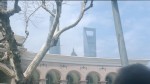
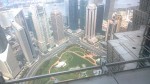
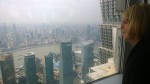
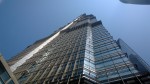
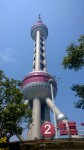
It was quite a long approach to Shanghai, we took on two pilots at 2:30am, one for the approaches and the other for the Chang Jiang estuary of the Huangpu River close to where it joins the Yangtze River. The Yangtze is Asia’s longest river at 3,900 miles and is the scene of that famous Incident involving HMS Amethyst. Both rivers are light brown to yellow with the sediment brought down and are known locally as yellow river (or sometimes, mud river) which is probably the origin of the Yellow Sea’s name as they both flow into its southern end. Shanghai is the fourth busiest port in the world and it looks it, as a constant stream of ships has passed us inbound and outbound sometimes two or three abreast. We went ashore for a trip on the maglev train out to the airport and the journey from the port to the station took over an hour through what appeared to be thousands and thousands of residential high rise tower blocks. With a population of 8.8 million, Shanghai is not what you call an attractive city though it is impressive by virtue of its sheer size. Some of the individual buildings are unusual, but as they seem to have been placed merely to outdo their immediate neighbour and the whole effect is one of piecemeal development, all a bit of a hotchpotch really. We arrived at Longman Road Station and boarded the train to Pudong International Airport station. The journey was to take eight minutes and reach a maximum speed of 431 km/h but we only got up to 301 km/h in both the outbound and inbound journey, but it was an impressive journey given the rate of acceleration for a train full of passengers and the closing speed of some 700 plus km/h when two trains pass each other. From the maglev we moved on to the Jinmao Tower to see the city from the observation platform taking the express lift at a speed of 9 metres per second to height of 384 metres (approx 1300ft) in 45 seconds. From there we got the true scale of the city (and the true scale of pollution in the form of smog), however looking down inside the tower we had a stomach churning view of the foyer of the hotel some 54 floors below us, not a view for the faint hearted. All things considered it was an interesting visit but Shanghai is not the sort of city you can take to your heart and the journey back to the ship underlined that fact as it took, getting on for 1hr 45mins for the return journey, put people who were taking second trips under some pressure. Interestingly enough for a city with so much traffic (55,000 taxis) the cost of a driving licence alone is twelve thousand US dollars, and at one stage the council was issuing two new ones a month. Extreme measures for parking spaces such as sharing a space with another car on alternate days, I don’t know where they park when it’s the other persons turn. Some streets are closed at night and turned into car parks. And get this, you can be given the death sentence for drunk driving at the most extreme. Driving is a bit of a nightmare, as to give way is to lose face and that goes for giving way to pedestrians at a pedestrian crossings, so to cross the road you launch yourselves as a crowd with your fingers crossed. They call it the sticky rice technique, you just have to hope it doesn’t turn into a stick mess technique.

Day at Sea

Tuesday 25th March

Last night we were at dinner on our own as the other four were ashore watching a late acrobatic show and were not due back on board until about 10:00pm so as a result we were finished early and decided to go up to the commodores lounge to have a drink and watch our departure from Shanghai in comfort, serenaded by a crooning piano player. Almost spot on 10:30pm we cast off, slid sideways from the quay for about 1,000 metres (no 180° turn this time) until we could slip into the stream of traffic leaving the port. When I say port I don’t mean port in the way that I understand port to mean i.e. an area where ships can tie up and take on or discharge cargo like Felixstowe or Harwich. I mean ‘P O R T’ as in the size of a Country! We seized the opportunity to slip into a gap in the continuous stream of passing vessels, in a manner that you would join the motorway from a slip road. Bearing in mind that this is late at night and there was a stream of vessels of a similar density heading into the port, which begged the question where in hell are they coming from and going to? Well, looking upstream we could see, as far as our eyes could see, illuminated berths on both sides of the river with working cranes dealing with the lucky ones who managed to get alongside. To say we were transfixed would be an understatement, everywhere we looked were ships, manoeuvring, crossing and waiting their chance to get wherever they were trying to get. I guess this is why we need two pilots. But what is the most gobsmacking fact of all this is only the fourth busiest port in the world. I’d love to see the busiest. Anyway we secured our place in the main flow and accelerated up to the speed of the lane we were in (there being three lanes, as any self-respecting motorway of ships would have. A bit disconcerting as in the dark the banks look closer and the ships appear from nowhere). We must have watched this procession for about 45mins before we decided to call it a night and wander off to our cabin. After getting changed for bed, I noticed we were still passing wharf, so I got the binoculars and spent another hour or so absorbed in the riverside, as by resting them on the window I could watch a continuous ribbon of wharfs pass by. When I finally decided to call it a day, I put the TV on channel 40 to see if we were anywhere near the mouth of the river. The forward looking bridge Webcam showed, for as far as I could see on camera, more wharf, so I thought sod it! (Language Michael). I now know how HMS Amethyst must have felt trying to escape down river; the river never seems to end (yes! yes! know, we were in a different river, but you know what I mean). I clambered into bed and watched until I felt asleep, more and more cranes ………..zzzzzzzzzzz. When I opened my eyes, I thought I had imbibed too much, as there was nothing to see, no land, no sky and no sea, just fug (is that a word?) The sea was as calm as you could expect in the East China Sea, but it could only be seen by looking straight down from the rail i.e. 10 metres we had cloud down to sea level, normal for here, some people call it fog, the captain included. The sea state was a green oily swell but it was spoilt by the rubbish that floated by, a lot of it was seaweed, some clumps bigger than small islands, but appallingly there was a huge amount of flotsam and jetsam (i.e. rubbish) old fishing net buoys, drums and plastic cups and amongst it was a rather nasty scum floating within the rafts of seaweed. It is the dirtiest sea I have ever seen. Weather is improving. The chill of Japan and the bitter wind of Korea are now behind us and the temperature for tomorrow is predicted to be 28°C as once more we head south. We are tracking the Chinese coast, following the busy shipping lanes travelling through a lot of fishing areas.

Robert Winston gave another of his excellent talks “Bad Ideas” will we still be humans in 100 years? Will manipulating genes to improve the human race lead to consequences we didn’t intend, will it lead to the objectives that Hitler set out to achieve, the perfect human race? Followed by Ian Browns talk on Kenneth Noyes life of crime, getting away with murder of a police officer, escaping sting through a bent police sergeant. Another Chinese port tomorrow looking forward to seeing what this one has to offer.

Bronze ‘d Runners

Wednesday 26th March

Probably the most unpleasant awakening of the voyage so far. We were creeping along in thick ‘smog’ it looked like sea mist until we opened the veranda door. Stepping out I was caught in the back of the throat by the acidic taste of Xiamen’s finest pollution. It was most unpleasant, not the same as a bad smell, the like of which you get in some of the more ‘exotic’ cities of the world, the sort that hits you, then gradually subsumes itself into the general atmosphere before becoming part of the experience as you get used to it, until you no longer notice it at all. This was seriously, chemically unpleasant to the extent it was uncomfortable when you breathed in and we weren’t even there yet.

Whilst at breakfast gloomily staring out at the fog scape we had the announcement that we would be an hour late in arriving, we weren’t sure if this was good or bad news. Our tour was billed as ‘Leisurely Xiamen’ and we were (unusually) pre-warned by Cunard not to expect too much from the tour as the guides were students. This advice turned out to be correct, but not for the reasons given in their letter. Our guide (a young lady called Summer) was good despite being hamstrung by events beyond her control. Her English was excellent (and a subject she said she loved) but the microphone and a poor sound system, coupled with the barracking by an American guy who was shouting that couldn’t hear, unnerved her. The bus had, should we say, seen better days and the severe whine from the rear diff made normal conversation difficult, let alone hearing what Summer had to say. Summer also had difficulty with the driver who seemed to want to go the way he wanted, rather than the way she was indicating meaning that she was left to talk about areas that she had no information about and not prepared for. I am not sure how the trip had been sold to Cunard, but I hope they listen to the feedback (Cunard take note please!). But it wasn’t all bad Summer was excellent in pointing out the good in Xiamen (pronounced Sharman by the way). They had landscaped every bit of spare ground, even very narrow verges in an attempt to bring green into this concrete jungle and draw the eye away from some massive shabby/grubby apartment buildings. Right in the middle of the city they had built a park around an old sea inlet which had become marooned by various landfill schemes and called it Egret Park. In the centre was a statue of a nude washing her hair with an Egret perched on her shoulder. Summer told us that she was the Egret Goddess and she symbolised cleanliness as an Egret would not live where it wasn’t clean. She then rather spoilt it by complaining that the girl had a European face, not a Chinese one. We continued on to a stone dragon boat with stone rowers (paddlers?) which symbolised the strength and stamina of the Chinese people. Was I mistaken or did I hear echoes of Chairman Mao at this point. Anyway we returned to the bus, encountering on our way two our three other groups who had been told to make their own way across this park and were not at all happy.

Back on the bus Summer explained we would be passing some buildings built by European settlers which the Chinese called Horse Riding buildings because they looked like horses feet. Wider at the bottom than at the top due to the veranda roofs built to protect passer-by’s from the sun and rain. These turned out to be in a very rundown condition which was odd considering how proud they were of them. I did notice that quite a few of them also had gardens on their roofs. The publicity blurb in the daily programme told us that this city was one of China’s cleanest, we had a little difficulty with that statement. Perhaps the recalcitrant driver was determined to give us the warts and all tour. Things got a little better as we drove out along the coast to the second goddess who was broken hearted over some lost love. We only got bits of the story because of the background noise, but when we got there the statue was staring out to sea towards Taiwan longing to be there. (I could understand, goddess number two, I was with you on that). We were being inundated with beggars and peddlers, one was selling sticks of twisted sugar coated crispy bread like substance. His sales pitch consisted of repeating over and over again hello, hello, hello in a very high pitch voice. And perhaps he would have had some success were it not for the fact the bundle was tucked under a very sweaty armpit and it was being adjusted frequently by a very grubby hand. One didn’t like to dwell too much on what that hand had been recently used for. Whilst we waited for the rest of the coach to finish admiring the beach, the goddess and the bordering gardens, I noticed that a narrow strip of grass (about 10 yards wide) running all along the sea front had, at intervals, life size bronze statues of marathon runners. We were told that these statues were reproductions of actual runners in a marathon run in the city that had passed along this road. As we drove along we passed runner after runner, in all there was a total of ninety nine runners and towards the back was someone in a wheelchair being pushed by another runner and a very puffed looking overweight guy bringing up the rear. It was a very effective way of bringing a long, otherwise ordinary strip of grass and bushes to life.

Back in the city we were dropped off for an hours shopping in their main shopping street crossing a six lane road to get there. Drivers do not obey the pedestrian crossing rules of most countries so we adopted the sticky rice technique we had been taught in Shanghai, rush out in a group and stick together, they don’t like running into too many people at once it takes too much explaining why they didn’t see us all. We got there but we did feel a bit like those Africans getting their Sunday roast, oh! I forgot I didn’t tell you that story did I. (One for the pub then, when conversation flags. Don’t groan like that). Well shopping took all of ten minutes and we sheltered (sorry browsed) in a department store with air conditioning until it was time to repeat our sticky rice technique and return to the bus. Fifteen minutes later we were back at the ship thanking Summer for a lovely trip and telling her it didn’t matter that the driver was bolshy and the coach was too noisy because her commentary was excellent and her English was too. She ended up with a fist full of notes so I guess she was partly convinced, but we knew it had been a trial for her and not of her making. The day ended quite pleasantly because we went for drinks with a couple from Australia (Bill and Maxine) at our dinner table who are leaving the ship in Hong Kong. We spent a couple of hours on their balcony quaffing some very nice Australian wine and watching the sun sink into the skyline of tower blocks across the harbour before continuing around the dinner table. Thus ended our mixed day in Xiamen, following dinner we wandered around the upper deck for one last look before retiring. As there was not going to be any Japanese type farewell we decided against staying up to watch our departure at midnight.

Nagasaki – Photos